
Jasper County Criminal Court Records
A criminal court record is the court case file, not the booking record. In Jasper County, felony and higher-level prosecutions are handled in Circuit Court General Sessions. The 14th Circuit Solicitor is the chief prosecuting agency for Jasper County and the rest of Judicial Circuit 14. Lower-level criminal matters, warrants, bond issues, preliminary hearings, and some traffic or ordinance cases can start in Magistrate Court, Bond Court, Central Traffic Court, or Municipal Court.
The Clerk of Court is the local custodian for Circuit Court files at 265 Russell Street in Ridgeland. The Public Index is the online starting point for many public case entries, but a certified copy, older file, or document-level request may still require the Clerk. Charges themselves are only one part of the case. A full criminal record can also show pleas, motions, hearings, disposition, sentencing sheets, probation terms, and entries showing whether a charge was dismissed, reduced, or resolved by plea or trial.
The South Carolina criminal procedure code is one source assigned to Jasper County criminal court records.
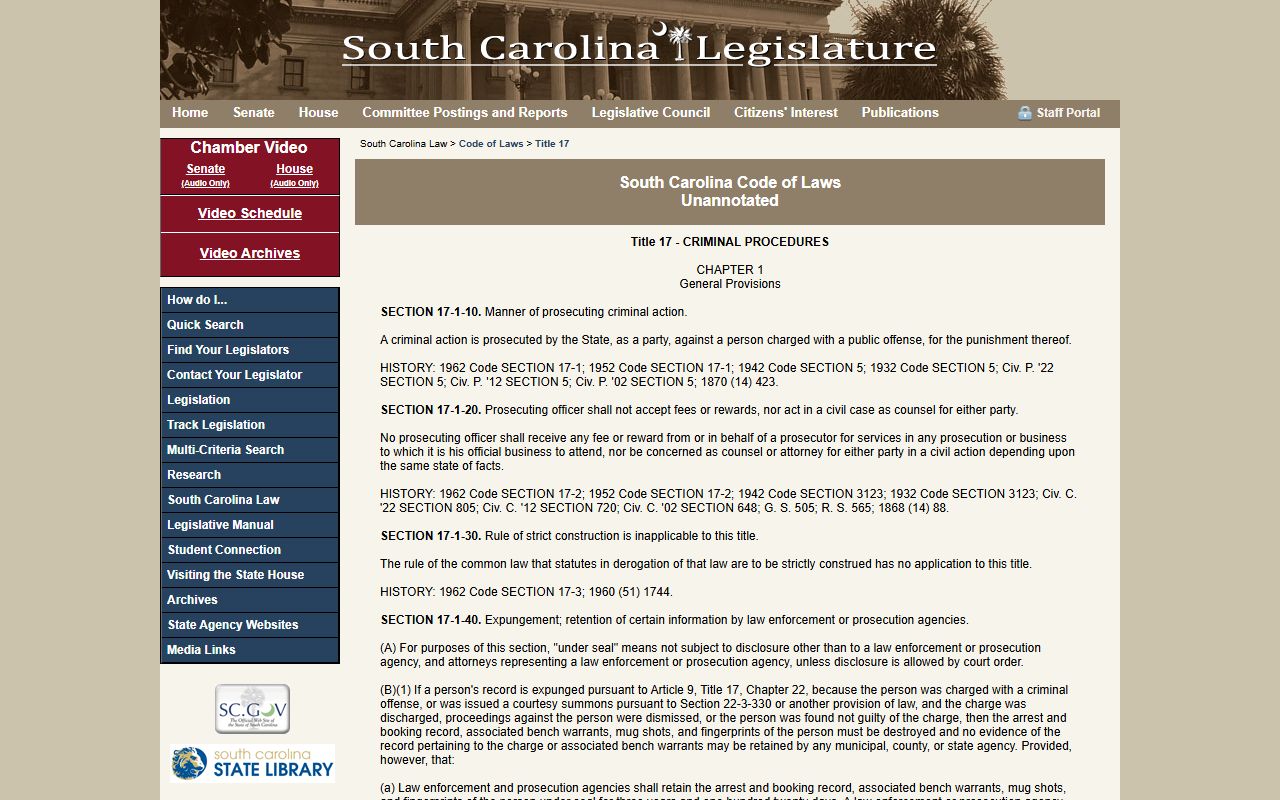
State criminal procedure controls many case-file rules even when the prosecution is filed locally in Jasper County.
Search Jasper County Criminal Cases
The online starting point is the SCJB Case Records Search, which routes users to the Jasper County Public Index. SCJB identifies Jasper County as Circuit Number 14 and County Number 27. The site requires cookies and JavaScript, and SCJB warns that some browsers may require a pop-up exception for case detail. Case searches should use the portal's available name, case number, court, and case criteria fields because exact Jasper Public Index form labels were not captured in the research environment.
- Open the SCJB Case Records Search page and choose Jasper County from the official county list.
- Use the Jasper County Public Index to search the available criminal case fields.
- Review the court, case type, filing date, defendant, docket events, charges, and disposition fields that display.
- Use SCJB Court Roster Search or Solicitor docket posts for hearing schedules when a court date is the main need.
- Contact the Clerk of Court for certified copies, older records, or non-digitized criminal court files.
- For arrest reports or law-enforcement incident reports, use the Jasper County Sheriff's FOIA channel rather than the Clerk.
For a broader court-file workflow, Jasper County court records explains the general Public Index, Family Court, roster, FOIA, and in-person access channels.
Jasper County Criminal Case Flow
A criminal case record grows as the case moves from accusation to outcome. A charge may be filed after arrest, warrant, citation, indictment, information, or another charging step. The court then records hearings, pleas, motions, trial settings, continuances, orders, verdicts, or plea results. The docket may look brief, but each entry can signal an important event.
Case flow: Charges Filed › Arraignment › Pretrial and Motions › Plea or Trial › Disposition › Sentencing
| Stage | What Happens |
|---|---|
| Charges filed | The prosecutor, officer, court, or grand jury path creates a court charge that can appear in the case record. |
| Arraignment | The defendant is formally advised of the charge, and a plea may be entered or recorded. |
| Pretrial and motions | The docket may show bond issues, discovery matters, continuances, suppression motions, or other requests to the judge. |
| Plea or trial | The record may show a guilty plea, trial, verdict, dismissal, amendment, or other resolution path. |
| Disposition | The court records the result of each charge or case event, such as guilty, dismissed, acquitted, or otherwise closed. |
| Sentencing | If there is a conviction, sentencing entries may show jail, prison, fine, probation, restitution, or other court-ordered terms. |
The 14th Circuit Solicitor homepage is a successful source for Jasper County criminal court records and prosecution context.
The Solicitor's office is central to General Sessions cases because it files and prosecutes Jasper County felony-level criminal matters.
Jasper County Criminal Record Fields
A Jasper County criminal court record should be read field by field. A docket event is not always the final outcome. A charge line is not always a conviction. A sentence appears only if a conviction or plea leads to punishment. Public display can also be narrowed by redaction rules, sealed-record orders, expungement orders, and statutory confidentiality.
| Field | What It Shows |
|---|---|
| Case number | The court file number used to identify the Jasper County criminal case. |
| Court and division | The venue, such as Circuit Court General Sessions, Magistrate Court, Municipal Court, Bond Court, or Central Traffic Court. |
| Defendant | The person charged, subject to redaction and public-display limits. |
| Charge | The offense alleged by the charging document, citation, warrant, indictment, or prosecutor filing. |
| Bond entry | Release conditions, bail proceedings, or related court entries when public. |
| Plea | The defendant's formal response, such as guilty, not guilty, or another plea entry. |
| Motions and hearings | Requests, court settings, continuances, orders, and other procedural activity. |
| Disposition | The result of a charge or case, such as dismissed, guilty, acquitted, amended, or closed. |
| Sentence | Punishment after conviction, which may include jail, prison, fine, probation, restitution, or other terms. |
| Restriction status | Whether an item is sealed, expunged, juvenile, redacted, or otherwise closed by law. |
Jasper County Charges vs Convictions
Charges and convictions are not the same. A charge is an accusation filed in court. A conviction is a final result after a guilty plea, verdict, or other qualifying adjudication. Jasper County criminal court records can show charges that were dismissed, reduced, amended, or resolved through a diversion path. That is why a reader must check the disposition line before treating a case as a conviction.
| Point | Charge | Conviction |
|---|---|---|
| Meaning | An allegation that a crime was committed | A final finding or plea that legally resolves guilt |
| Where it appears | Charging document, warrant, indictment, citation, docket, or case entry | Disposition, judgment, plea, verdict, sentencing, or final order entry |
| Can change | May be amended, dropped, reduced, or dismissed | May be appealed, expunged where eligible, or affected by later orders |
| Best check | Review the latest docket and charge status | Review the disposition and sentence fields |
For a closer look at the accusation side of the record, Jasper County arrest records and court charges separates arrest, booking, and filed court charges from the full criminal case file.
Jasper County Criminal Court Agencies
South Carolina uses the term Solicitor for the prosecutor. The 14th Circuit Solicitor covers Allendale, Beaufort, Colleton, Hampton, and Jasper counties. Research identifies Solicitor Duffie Stone and notes that the circuit covers about 3,200 square miles in the Lowcountry. The Jasper office is at the Jasper County Courthouse, 265 Russell Street, Ridgeland, with a listed phone number of 843-779-8729.
The Solicitor files and prosecutes General Sessions cases, publishes some docket and victim-services resources, runs court alternatives, and processes many criminal-record expungement applications under South Carolina's Uniform Expungement of Criminal Records Act. Public defenders are appointed by the court for financially indigent defendants in criminal court. The SCCID Jasper listing and Fourteenth Circuit Public Defender office are the official public-defender sources captured in research.
14th Circuit Solicitor, Jasper Office
Jasper County Courthouse
265 Russell Street
Ridgeland, SC 29936
843-779-8729
The 14th Circuit Solicitor contact page is an assigned image source for Jasper County criminal court records.

That contact path matters for Jasper County expungement questions, prosecution records, and General Sessions case context.
Read Jasper County Dispositions
Disposition is the result field. In criminal records, it may show guilty, not guilty, dismissed, amended, reduced, nolle prosequi, deferred, or another status. A dismissal can end one charge while another charge in the same case remains active or resolved by plea. A sentence should be read with the conviction field, not by itself.
Diversion can also affect the final record. The 14th Circuit Solicitor lists court alternatives such as Pre-Trial Intervention, Traffic Education Program, Alcohol Education Program, Multi-Disciplinary Court, Juvenile PTI, and Juvenile Arbitration. Successful completion can lead to dismissal or expungement paths when South Carolina law allows it. The specific eligibility rules depend on the charge, prior record, program, and statute.
The 14th Circuit Solicitor court alternatives page is an assigned source for Jasper County criminal court records.
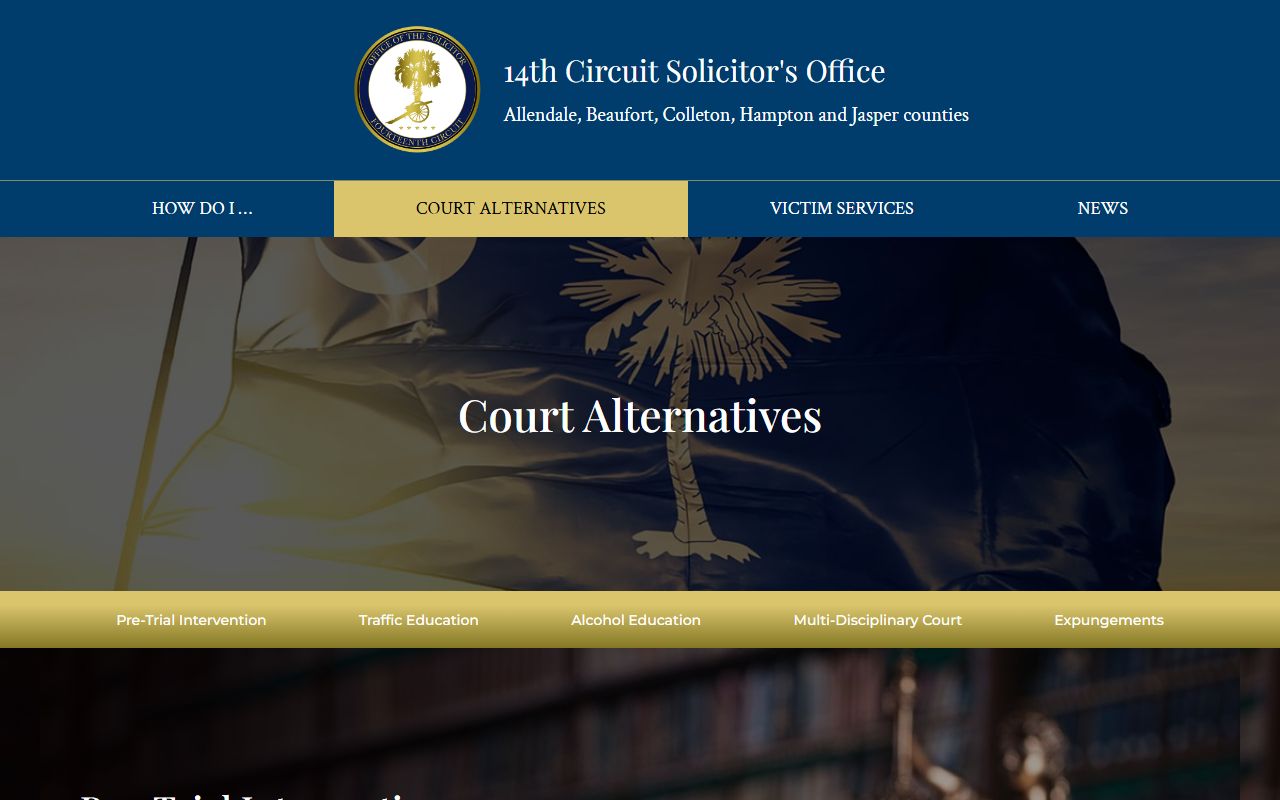
Court alternatives can change how a case ends, so the docket and disposition must be checked together.
Jasper County Sealed vs Expunged
Sealed and expunged records are both restricted, but they are not the same. A sealed record is closed from general public access by law or order. An expunged record is removed, destroyed, or treated as not public under the applicable South Carolina statute and court order. Some agencies may retain sealed information for limited purposes after expungement.
| Point | Sealed | Expunged |
|---|---|---|
| Public view | Hidden or restricted from the general public | Removed from public access under the order and statute |
| Who may retain it | Court or agency access may continue under limited rules | Law enforcement or prosecution may retain sealed information for limited legal purposes |
| Common source | Statute, court rule, or judge's order | Expungement order and South Carolina expungement statutes |
| Jasper County path | Confirm with the court that issued or keeps the record | Contact the 14th Circuit Solicitor for many solicitor-administered categories |
The South Carolina diversion and expungement statute chapter is an assigned image source for Jasper County criminal court records.
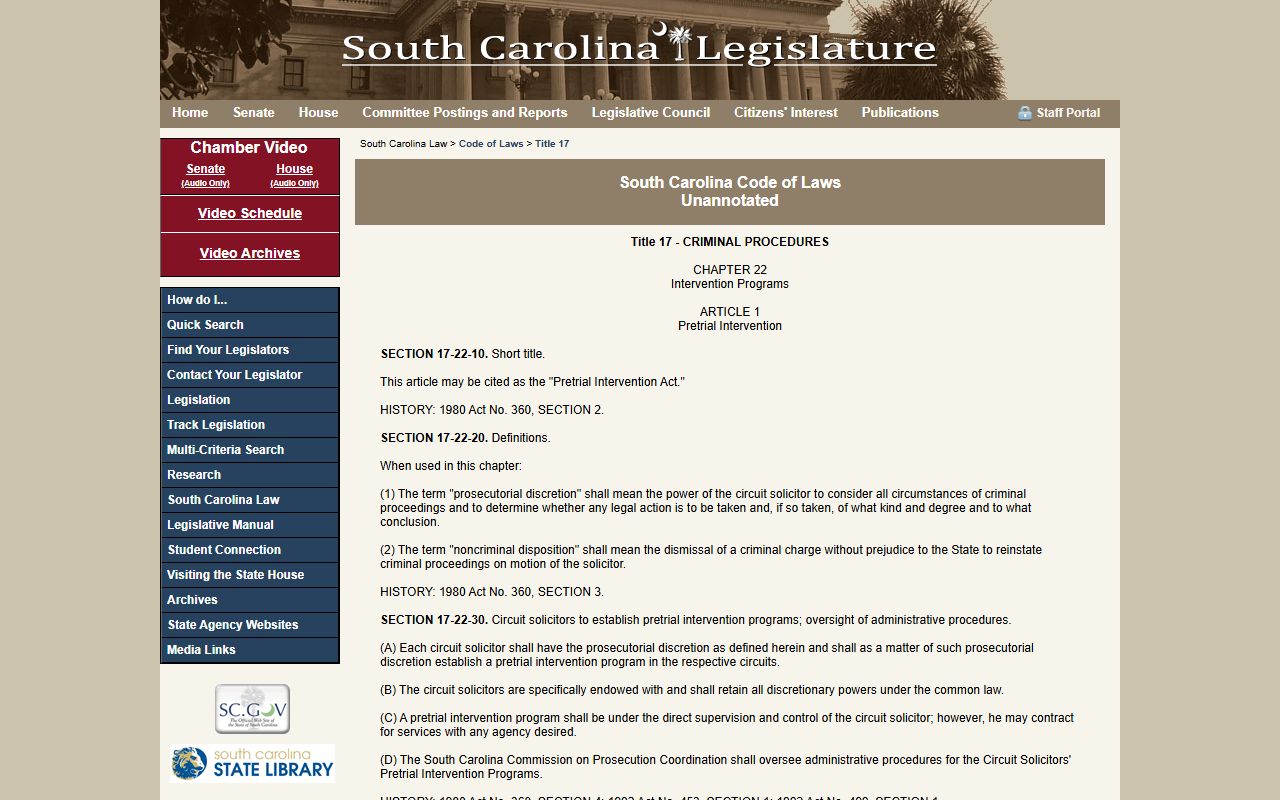
Expungement should not be assumed from a dismissal alone. The order and statute determine what public access changes.
Jasper County Criminal Records Access
South Carolina FOIA gives access to public records unless an exemption or other law closes the record. S.C. Code Section 30-4-50(A)(8) also treats reports showing the nature, substance, and location of a crime or alleged crime as public, with exempt information removable. Court criminal records, however, are shaped by court rules, public-index limits, sealing orders, juvenile confidentiality, and expungement statutes.
Key Statutes:
S.C. Code Section 17-22-910 - Solicitors administer applications for listed criminal-record expungement categories.
S.C. Code Section 63-19-2010 - Juvenile court records are confidential except for specific authorized access.
For law-enforcement records, Jasper County Sheriff's Office uses a separate FOIA path at SheriffDiscovery@jaspercountysc.gov with a completed form and state ID. The Sheriff's page states that records no more than 24 months old have a 10-business-day availability notice period plus 30 calendar days to provide records. General county FOIA uses foia@jaspercountysc.gov. Those paths do not replace criminal court records kept by the Clerk.
Restricted Jasper County Criminal Records
Juvenile records are the clearest restricted category. South Carolina law makes juvenile court records confidential and available only through specific exceptions or court order. Adoption and mental-health records can also intersect with court cases but remain confidential under their own statutes. Rule 41.2 requires redaction of protected personal identifiers in court filings, and SCJB no longer displays home addresses on the public index.
Ongoing law-enforcement material may also be withheld where disclosure would interfere with proceedings, impair a fair trial, invade privacy, reveal confidential sources or techniques, endanger safety, or reveal intercepted communications. These limits mean a Jasper County criminal case may have public docket entries while related reports, juvenile material, sealed filings, or expunged entries remain unavailable.
Important: Public criminal case lookup is not a substitute for an FCRA-compliant employment, tenant, credit, or insurance background check.